




Key Takeaways
- Understanding key differences between caster types can lead to safer, more efficient operations.
- Load capacity, flooring type, and mobility needs are all crucial factors in caster selection.
- Modern innovations in caster design can improve productivity and reduce workplace injuries.
- Practical maintenance and care tips can extend the lifespan of your casters and wheels.
- External resources provide further guidance on application-based caster choices and advancements in material handling equipment.
What Are Casters and Why Do They Matter?
Casters and wheels are unsung heroes in industrial, commercial, and healthcare settings. They’re small, simple components, but are outsized in daily operations, affecting everything from workflow to safety. In warehouses, they streamline the transport of pallets, racks, and heavy machinery; in hospitals, they allow beds and carts to glide quietly down corridors; in offices, they make moving chairs, equipment, and filing cabinets a breeze. What sets these fixtures apart is their convenience, reliability, and specialized performance, which they bring to demanding environments. Industrial steel caster wheels are a popular and smart choice for heavy-duty applications requiring strength and durability. Their sturdy construction ensures that materials and equipment can be transported efficiently, reducing the physical strain on staff and keeping workflows punctual and organized.
Selecting the correct caster or wheel is crucial for minimizing manual handling, speeding up movement, and reducing workplace injuries. Studies show that equipment with casters tailored to the environment can reduce back injuries and repetitive strain. Well-matched wheels protect flooring, extend equipment lifespan, and ensure smooth, quiet transport, especially when noise impacts patient recovery or office productivity. Thoughtful caster selection is a foundation for operational success and safety.
Factors to Consider When Selecting Casters and Wheels
The selection of casters and wheels is a complex process that requires careful consideration of load capacity, flooring material, and environmental factors. Each caster is designed to bear a specific weight, and exceeding this rating can lead to premature failure or accidents. To ensure dependable operation, multiply the total load by a safety factor, usually 25%-33%. Hard surfaces like concrete should be paired with softer wheels like rubber or polyurethane, while soft floors or carpets should be paired with harder wheels made from plastics or metal. Investing in suitable wheels can save costs over time and protect the environment from scratches and scuffs. Environmental factors also play a crucial role, as casters made from resistant materials like stainless steel or zinc-coated components can withstand hazardous environments and protect against rust or corrosion. This preserves not only the caster function but also the safety and integrity of the entire operation.
Different Types of Casters and Their Functions
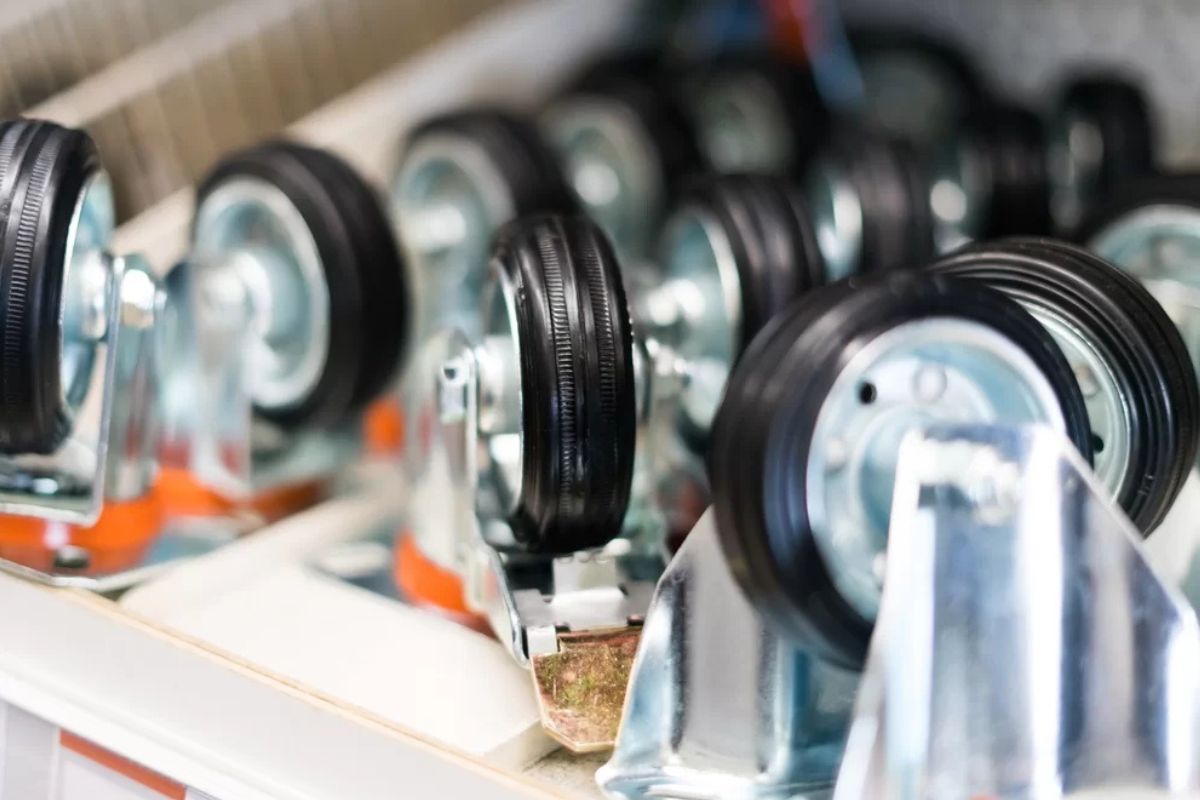
Casters are versatile tools used in various industries. Swivel casters offer unmatched maneuverability for equipment that can navigate sharp turns or tight spaces, like hospital beds or retail display racks. They allow users to change direction effortlessly, making handling safer. Rigid casters stay locked in a straight line, ideal for heavy transport carts in factory settings. Specialty casters are designed with shock absorbers or advanced locking mechanisms to minimize vibrations. These casters also feature foot brakes, noise-reducing treads, and mechanized height adjustment, showcasing the diverse and engineered options available to meet different industries’ needs.
Material Options for Casters and Wheels
Construction materials for casters and wheels significantly impact their durability and suitability for various settings. Plastic wheels are lightweight, economical, and ideal for chemical-prone environments. Rubber wheels provide a quiet ride, absorbing surface imperfections and reducing noise, making them suitable for hospitals, schools, and offices. Polyurethane wheels combine rubber’s silent properties with durability, making them ideal for manufacturing floors and warehouses. Steel and cast iron wheels are strong, able to support immense weights and endure rugged surfaces, but are noisier and more likely to wear down flooring. These wheels are commonly found in foundries, factories, and shipping yards.
Technological Innovations in Caster Design
Caster technology has evolved to meet the complexity of modern industries, with smart casters introducing sensors to track movement and usage patterns. Automation in warehouses and logistics centers relies on casters for robotics and guided vehicles, improving productivity and reducing downtime. Upgrading to ergonomic and automation-designed casters can reduce push and pull forces, protecting workers from musculoskeletal injuries and reducing lost workdays and workers’ compensation claims. New tread designs and bearing technologies also contribute to efficiency gains, reducing energy use, improving production floor maneuverability, and accommodating higher throughput in fulfillment centers. These enhancements put organizations at the forefront of safety, productivity, and employee well-being.
Best Practices for Maintenance and Safety
Even the best casters require proper maintenance to stay reliable. A proactive maintenance routine is key to preventing sudden breakdowns. Start by developing a regular schedule for inspecting wheels and bearings for signs of wear, cracks, or embedded debris that could impede movement or cause failure. Flat spots and chunking are early signals that replacement is needed.
- Inspect wheels, axles, and fasteners monthly for damage or looseness.
- Regularly clean away dirt, string, or hair that can wrap around axles.
- Apply lubricant to all moving components, especially bearings and swivel joints, to ensure smooth rotation and prevent squeaking.
- Replace any casters showing significant wear—delaying can lead to floor damage, instability, or injury.
- Distribute loads as evenly as possible to prevent excessive stress on a single caster.
Adhering to these steps extends product lifespan and maximizes safety, allowing for uninterrupted and hazard-free workflow.
Frequently Asked Questions About Casters
How Do I Know What Load Capacity I Need?
Load capacity should never be left to guesswork. Divide the total weight of the item and its contents by the number of casters supporting it, then multiply by a safety factor. For example, if a fully loaded cart weighs 800 pounds and has four casters, each needs a capacity of at least 200 pounds. A 25% safety margin ensures the casters handle static loads, bumps, and uneven floors.
Are All Casters Compatible With Every Surface?
No, making the wrong choice can result in complex movement or floor damage. Choose softer tread casters for hard floors to protect surfaces and reduce vibration. Carpeted areas or tile respond well to harder wheels, which reduce resistance and rolling effort. Always match wheel composition to your floor type for ease of movement, safety, and long-term maintenance savings.
What’s the Difference Between Swivel and Rigid Casters?
Swivel casters rotate 360 degrees, letting users easily change direction and maneuver in tight spots. Rigid casters do not swivel, offering stability for straightforward movement—ideal for applications requiring consistent pathing. Combining both on a cart allows for controlled turning with directional stability.