




Key Takeaways
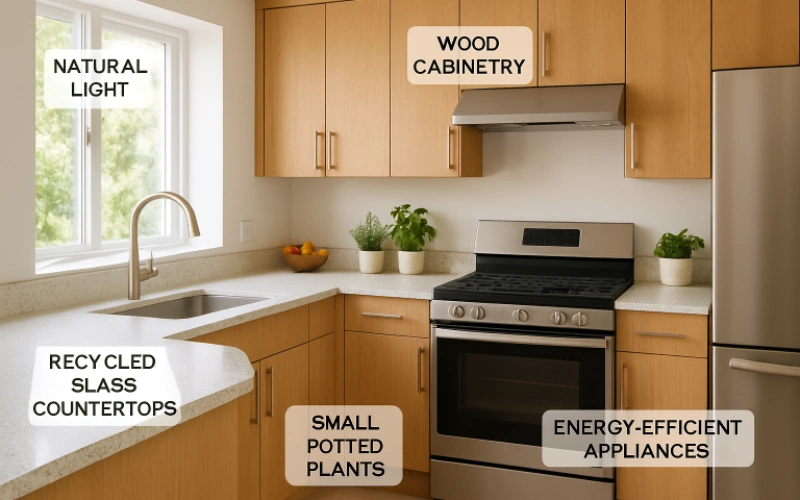
- Utilizing sustainable materials like reclaimed wood and recycled glass contributes to eco-friendly kitchen designs.
- Energy-efficient appliances and LED lighting reduce energy consumption and lower utility bills.
- Smart technology integration enhances convenience and promotes sustainability in the kitchen.
- Water-conservation fixtures and efficient waste-management systems support a greener lifestyle.
- Designing for longevity with timeless aesthetics and durable materials ensures a sustainable kitchen.
Table of Contents
- Sustainable Materials
- Energy-Efficient Appliances
- Smart Technology Integration
- Water Conservation Fixtures
- Efficient Waste Management
- Designing for Longevity
Modern homeowners are prioritizing sustainability in their kitchen remodels, focusing on materials and solutions that reduce environmental impact while enhancing daily quality of life. Eco-friendly choices, like energy-efficient appliances and repurposed surfaces, combine beauty with responsibility, creating kitchens that are both contemporary and conscience-driven. These trends extend beyond reducing waste; they help elevate the overall value and comfort of the home. For those seeking fresh solutions, custom kitchen design Tysons, VA, offers tailored options for a greener, more inviting kitchen space.
Designing sustainably doesn’t mean sacrificing style or performance. Innovative technologies, durable materials, and creative layouts now make it simple to meet both aesthetic and environmental goals. Selecting eco-conscious elements ensures your kitchen remains functional, attractive, relevant, and responsible for years to come.
As demand for healthier homes rises, green building practices have become a central point of discussion in kitchen remodeling. Selecting non-toxic finishes and durable, long-lasting materials not only reduces maintenance but also improves indoor air quality in your household. Integrating inclusive design principles means kitchens remain comfortable and practical for people of all ages, supporting multigenerational living and reducing the need for future renovations.
For additional insight into eco-friendly building standards and how they’re shaping remodeling trends nationally, the Times Union’s guide to home remodeling is a great resource.
Sustainable Materials
Sustainable materials stand at the forefront of modern kitchen makeovers. Reclaimed wood cabinetry delivers unique character and warmth, while recycled glass countertops provide vibrancy and durability. Bamboo, celebrated for its rapid renewability, is increasingly used in both cabinetry and flooring, offering a distinct, elegant look that’s also gentle on the planet. Choosing low-VOC (volatile organic compound) paints and finishes further improves indoor air quality, reducing toxic off-gassing and supporting a safer cooking environment.
Energy-Efficient Appliances
Cutting household energy consumption begins with your kitchen appliances. ENERGY STAR-rated equipment, such as dishwashers, refrigerators, and induction ranges, significantly decreases power and water usage, slashing utility bills and environmental impact. For example, induction cooktops offer superior energy transfer and more precise heat than conventional electric or gas options, all while remaining cool to the touch for added safety. Selecting LED lighting over traditional bulbs provides substantial long-term savings and improved illumination, further optimizing kitchen performance. For a deeper look into appliance ratings and benefits, Consumer Reports offers up-to-date reviews.
Smart Technology Integration
Integrating innovative technology is transforming kitchens into multifunctional, adaptive environments. Smart refrigerators feature interior cameras and grocery-tracking systems that assist with inventory management and meal planning. Ovens and slow cookers can be operated and monitored remotely, streamlining meal prep for busy households. Voice-activated faucets and lighting enhance hygiene and ease tasks, while smart plugs and energy monitors provide data to reduce unnecessary energy consumption further. These innovations empower homeowners to be more resourceful and efficient every day.
Water Conservation Fixtures
Water-saving fixtures play a pivotal role in sustainable kitchen design. Low-flow faucets and aerators reduce water consumption without sacrificing pressure, helping households conserve thousands of gallons annually. Touchless and sensor-activated faucets increase hygiene and ensure only the necessary amount of water is used for each task. Paired with high-efficiency dishwashers, these updates can dramatically trim your home’s overall water footprint, benefiting both the environment and your budget.
Efficient Waste Management
Sustainability goes hand in hand with effective waste management. Thoughtful kitchen designs incorporate designated pull-out bins for recycling, composting, and landfill waste, keeping disposal organized and accessible. Hidden compost drawers make it simple to collect food scraps for garden use or municipal collection, while labeled waste stations encourage proper sorting. By making recycling and composting effortless, these design strategies foster eco-friendly living habits throughout the household.
Designing for Longevity
Designing for durability and timelessness remains a core principle in sustainable kitchen remodeling. Selecting classic finishes and robust materials minimizes the temptation (and waste) of frequent cosmetic updates. Modular cabinetry and flexible shelf layouts adapt to shifting needs, allowing homeowners to optimize their space as their family grows or changes. Strategic storage for bulk goods combats unnecessary packaging waste, while large prep areas promote home-cooked meals over less sustainable takeout options. Ultimately, investing in thoughtful, enduring design translates to lasting satisfaction and reduced environmental impact.
Embracing these sustainable trends allows you to create a kitchen that’s as innovative and inviting as it is environmentally conscious. By making responsible choices now, you’ll ensure your kitchen is built to serve and inspire future generations.