




Key Takeaways
- Rigging is essential in construction for safely and efficiently moving heavy materials and equipment.
- Project managers must understand rigging components, load calculations, and site conditions to prevent accidents.
- Slings, shackles, hooks, and hoists must be carefully selected based on the load and environment.
- Accurate load assessments, including weight, center of gravity, and sling angles, are critical for safety.
- Adhering to OSHA, NATE, and other standards ensures compliance and reduces legal risks.
- Common hazards include overloading, improper angles, and environmental factors like wind or poor lighting.
- Proper training and certification for personnel are key to minimizing risks and promoting competence.
- A thorough rigging plan, including equipment selection and pre-lift meetings, improves safety and efficiency.
- Regular inspections, maintenance, and continuous training help maintain safe and productive lifting operations.
Introduction to Rigging in Construction
Rigging is a cornerstone of the construction industry, playing a pivotal role in the successful movement of heavy equipment and materials. As projects become larger and more complex, understanding rigging practices becomes crucial for safety, efficiency, and successful project delivery. For project managers, gaining knowledge of rigging systems, safe work practices, and ongoing training are essential steps to mitigate risks and prevent costly accidents. Those adopting rigorous standards often turn to rigging safety training Tulsa to ensure teams are well-prepared for the demands of modern construction worksites.
At the heart of every safe and successful lift is not only the equipment but the preparation and knowledge behind its use. Project managers must understand the different rigging elements and the various ways each one could affect the outcome of a job. Managing a lifting operation without a clear grasp of rigging fundamentals can lead to safety hazards, project delays, or even catastrophic equipment failure. By prioritizing the fundamentals, managers set the stage for safer project sites and reduced liability.
Rigging practices also directly impact both productivity and morale on the jobsite. When teams see management investing in their safety and expertise, it leads to greater trust, job satisfaction, and collaboration. Incorporating established rigging procedures elevates the professionalism of the entire construction operation.
Rigging is subject to local, state, and federal regulations. Compliance with national standards not only safeguards workers but also protects the project and company from legal repercussions. Project managers should remain proactive in staying current with industry developments in rigging standards and practices, sourcing information from recognized organizations such as the Occupational Safety and Health Administration (OSHA) and the American Society of Mechanical Engineers (ASME).
Key Components of Rigging Systems
Every effective rigging system comprises specific elements designed for the controlled movement and support of loads. Understanding the function and selection criteria for each component is vital for project managers overseeing complex construction tasks.
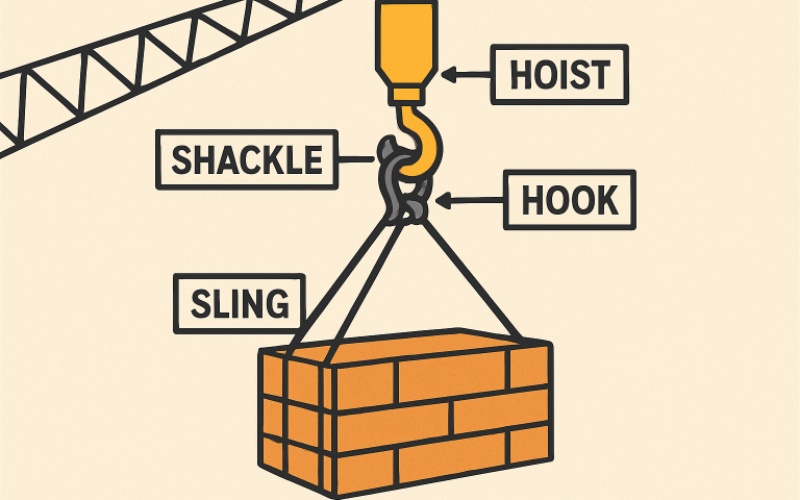
- Slings: The backbone of many rigging setups, slings are used to attach the load to lifting devices. They are manufactured from wire rope, alloy chain, or synthetic webbing, and are selected based on load weight, shape, and environmental conditions.
- Shackles: These U-shaped metal connectors link slings, hooks, and other rigging devices. Choosing the correct shackle makes a significant difference in maintaining a stable, balanced lift.
- Hoists: Used to move loads vertically or horizontally, hoists can be manual or powered. Accurate load evaluation is key in selecting the right hoist, as each has a distinct maximum rated capacity.
- Hooks: Attachments that secure the load to the lifting mechanism. Proper inspection and load-appropriate selection are non-negotiable for safe rigging.
[suggestion]Simple illustration showing basic rigging components labeled: a sling, a shackle, a hoist, and a hook connected to a lifted load.[/suggestion]
Each component must fit the specific requirements for every unique lift. Project managers should work closely with certified riggers, ensuring each item used has been recently inspected and meets relevant safety standards.
Understanding Load Calculations
At the core of safe rigging is a precise understanding of load calculations. Project managers are responsible for ensuring that the weight of every item to be lifted is accurately identified. This weight should never exceed the working load limits (WLL) of the rigging components in use. Situational factors, such as the load’s center of gravity and the angle of sling attachment, can further affect how weight is distributed across all rigging elements.
Misjudging the load or failing to account for dynamic factors during a lift can result in equipment failure or severe injury. Project managers should double-check all load calculations, ideally by using manufacturer charts or approved rigging calculators. For highly specialized lifts, consulting an engineer or a certified rigging professional is a best practice.
Safety Standards and Compliance
Adhering to recognized safety standards is not optional in the construction sector. Organizations such as the National Association of Tower Erectors (NATE) and OSHA set forth comprehensive guidelines to ensure that every rigging operation is performed as safely as possible. These standards cover critical practices, such as inspection frequency, proper technique for attaching slings and shackles, and clear marking of equipment with load ratings.
Maintaining awareness of these guidelines enables project managers to not only protect their workforce but also to remain compliant with regulatory requirements, thereby reducing the potential for costly penalties or project shutdowns.
Common Rigging Hazards and Mitigation
Despite the best intentions, rigging operations can pose significant hazards if not properly managed. Some of the most common risks include:
- Overloading equipment: Ensuring all gear operates within its rated capacity is foundational to preventing catastrophic failures.
- Improper sling angles: Incorrect angles can create additional force on lifting equipment, leading to dangerous stress and breakage.
- Environmental factors: Weather, wind, and poor lighting can all increase the danger of a lift. These are best addressed with pre-lift planning and continuous site monitoring.
Comprehensive training, consistent equipment checks, and enforcement of protocols such as tag lines and exclusion zones are critical to reducing or eliminating these hazards.
Training and Certification Requirements
Ensuring that all personnel involved in rigging receive proper, up-to-date training is one of the most effective ways to minimize the risk of accidents. Structured courses, such as the “Rigging Fundamentals” offered by the Safety Council STL, provide both the theoretical background and hands-on skills required for safe rigging. Many employers also mandate external certification before assigning employees to rigging duties, building a culture of competence and accountability.
Implementing Effective Rigging Plans
A comprehensive rigging plan is the blueprint for a safe and efficient lift. The development process should include a careful assessment of both the load and the lift environment, the selection of appropriate, well-maintained rigging equipment, the careful assignment of skilled personnel, and a thorough pre-lift meeting to review methods, expectations, and safety procedures.
- Assess the load and environmental conditions
- Select equipment based on an accurate load calculation
- Ensure only trained, certified personnel are involved in the operation
- Hold a pre-lift meeting for all parties to align on safety and operational plans
Following these steps consistently reduces the risk of mishaps and enhances both productivity and job safety.
Final Thoughts
Developing a solid foundation in rigging is vital for project managers responsible for overseeing construction sites. With deep knowledge of core rigging components, strict adherence to safety standards, and a commitment to thorough planning, managers can avoid significant risks, protect their workforce, and ensure operations remain compliant and successful. Consistently improving rigging practices and investing in ongoing training will set projects up for long-term achievement in the dynamic construction landscape.