




Key Factors Affecting Septic System Installation Cost
Installing a septic system is a major project for properties that are not connected to a centralized sewer network. The total cost can vary considerably from one property to another because septic systems must be designed around the site’s conditions, expected wastewater flow, local regulations, and the type of treatment system required.
Understanding the main factors that influence installation costs can help homeowners prepare a more realistic budget and avoid unexpected expenses.
Type of Septic System
One of the biggest factors affecting installation cost is the type of system required.
A conventional septic system generally includes a septic tank and a drainfield. However, some properties may require alternative systems because of soil conditions, limited space, slope, groundwater conditions, or local regulations. Alternative systems can include mound systems, pressure distribution systems, drip systems, or aerobic treatment units.
More complex systems typically require additional components, equipment, design work, and maintenance.
Size of the System
The system must be appropriately sized for the property’s expected wastewater flow.
Household size, occupancy, and the amount of wastewater generated can all influence the required tank and drainfield capacity. A larger home or property with higher expected wastewater flow may require a larger system.
Installing an undersized system can create operational problems, while an unnecessarily large system can increase upfront costs.
Soil Conditions
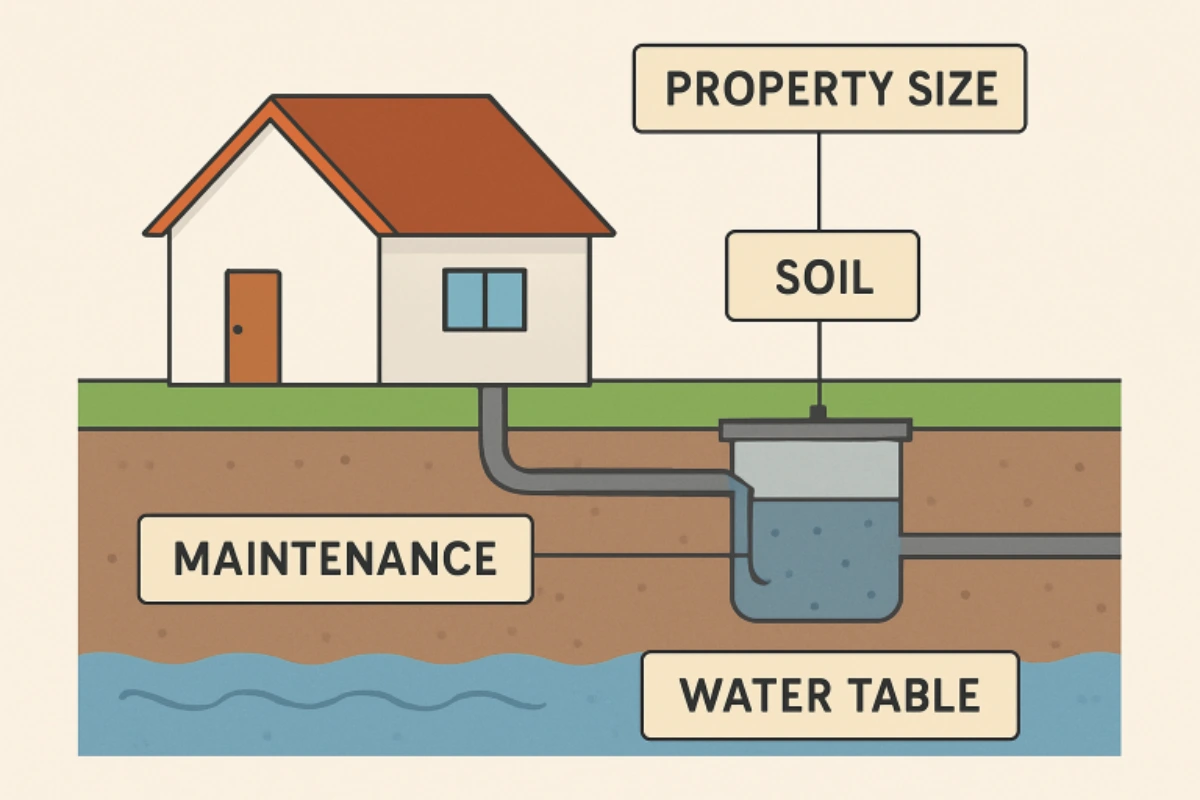
Soil is one of the most important site-specific considerations.
A septic drainfield relies on soil to receive and further treat wastewater. Soil characteristics influence how efficiently water can move through the ground.
Poorly suited soil may require a larger drainfield or an alternative treatment and dispersal system. EPA guidance notes that soil characteristics and permeability are important considerations when designing a drainfield.
Because soil conditions vary across properties, a site assessment should be completed before finalizing the system design.
Property Size and Available Space
The amount of usable land can affect both the system design and installation cost.
A property with plenty of suitable open space may allow a conventional drainfield to be installed more easily. Smaller lots can present additional design challenges, particularly when the system must meet required distances from buildings, property boundaries, wells, or surface water.
Local authorities establish many of these setback requirements, so the available installation area should be evaluated before construction begins.
Land Slope and Terrain
The shape and slope of the property can also influence costs.
A relatively level site may be easier to excavate and configure than a property with steep or uneven terrain. Significant elevation changes may require pumps, specialized distribution systems, additional excavation, or other engineering solutions.
Heavy equipment access can also become more difficult when the installation area is steep or difficult to reach.
Excavation and Site Preparation
Installing a septic system usually involves excavation for the tank, pipes, and drainfield.
The amount of excavation required depends on the system design and site conditions. Hard ground, large rocks, tree roots, difficult access, or other underground obstacles can increase labor and equipment costs.
Restoring the property after installation may also add to the final bill.
Septic Tank Material
Septic tanks can be manufactured from different materials, including concrete, fiberglass, and polyethylene.
Each option has different characteristics related to weight, installation, durability, and site requirements. The most suitable tank depends on the system design, local requirements, and site conditions.
The tank itself is only one part of the overall installation cost, so homeowners should evaluate the complete system rather than focusing solely on tank prices.
Pumping and Electrical Requirements
Some septic systems operate primarily through gravity, while others require pumps to move wastewater to another part of the system.
A system that requires a pump may involve additional costs for electrical connections, controls, equipment, installation, and future maintenance.
Alternative systems with mechanical or electrical components can also require more frequent inspections than simple conventional systems.
Permits and Professional Design
Local authorities generally regulate septic system installation through permitting and site requirements.
Depending on the location, homeowners may need a site evaluation, system design, permits, inspections, and approval before installation.
The exact requirements vary by state and local jurisdiction. EPA recommends contacting the local permitting or health authority to determine the applicable requirements.
Professional design and installation also add to the project cost, but they are important for ensuring that the system is appropriately designed for the property.
Drainfield Design
The drainfield is a critical part of a conventional septic system because it receives partially treated wastewater from the septic tank and allows it to move through the soil for additional treatment.
Drainfield size and design can vary depending on soil conditions, wastewater flow, available land, and local regulations.
A challenging site may require additional materials, excavation, or an alternative drainfield design, increasing the overall project cost.
Water Table and Ground Conditions
The depth of groundwater can affect where and how a septic system can be installed.
A high water table may limit the available separation between the drainfield and groundwater. In some situations, this can require a different system design or additional engineering.
Groundwater protection is also an important consideration because poorly designed or improperly located septic systems can contribute to contamination.
Landscaping and Restoration
After the septic system is installed, the surrounding property may need to be restored.
Costs can include replacing soil, reseeding grass, repairing landscaping, or addressing areas affected by excavation.
Homeowners should also remember that the drainfield needs to remain accessible and should not be covered with structures or surfaces that interfere with its operation.
Maintenance Costs
Installation is only part of the long-term cost of owning a septic system.
Routine inspection and pumping are important for maintaining system performance. EPA recommends that an average household septic system be inspected at least every three years, while pumping frequency depends on factors such as household size, wastewater volume, tank size, and solids accumulation.
Budgeting for future maintenance can help prevent larger and more expensive repairs.
How to Prepare an Accurate Budget
Because septic installation costs vary from property to property, getting a single generic price online may not provide an accurate estimate.
A better approach is to have the property evaluated by an appropriately qualified septic professional. Ask for an itemized estimate that includes:
- Site evaluation
- System design
- Permits
- Tank
- Drainfield
- Excavation
- Pipes and other materials
- Pumps and electrical work, if required
- Installation labor
- Inspection fees
- Landscaping or restoration
Comparing detailed estimates can make it easier to understand why different contractors provide different prices.
Final Thoughts
Septic system installation costs depend on much more than the price of the tank. Soil conditions, system type, property size, terrain, wastewater flow, drainfield requirements, excavation, permits, and equipment can all affect the final expense.
The best way to establish a realistic budget is to evaluate the property first and determine which type of system meets local requirements. Careful planning and professional installation can also help reduce the risk of costly problems later.