



Key Takeaways
- State governments are spearheading innovative environmental policies amid federal inaction.
- Local proximity enables tailored responses to pressing ecological issues.
- Advocacy groups and public engagement amplify the impact of state initiatives.
- Despite challenges, state-level leadership creates blueprints for broader policy reform.
The Shift Toward State-Led Environmental Initiatives
Recent years have marked a significant shift in how environmental policies are formulated in the United States. States are increasingly emerging as proactive agents of environmental protection, often stepping in when federal efforts stall. This transition is especially vital as local governments come to understand the unique ecological and social nuances within their borders, implementing adaptive strategies tailored to each community’s specific needs. As public urgency about climate change grows, state leaders have recognized the necessity to address pressing issues directly.
One of the most significant elements fueling this momentum is the effectiveness of environmental lobbying at the state level, which allows for swift and precise responses to evolving environmental challenges. By anticipating change and acting before federal legislation, states have become laboratories for innovation, piloting policies that often become models for the entire nation.
The increased public concern about environmental degradation, from deforestation to water contamination, has put additional pressure on local governments to act decisively. Grassroots activism, paired with state leadership, has proven especially potent, cultivating public partnerships and accountability that extend far beyond state lines. This new synergy ensures that the path forward combines legislative action, community engagement, and transparent decision-making.
Why States Are Taking the Lead
- Proximity to Issues: By operating closest to affected communities, state governments can recognize evolving threats swiftly—be it rising sea levels affecting coastal towns or agricultural concerns in rural areas—responding with agility that’s often impractical for the federal government.
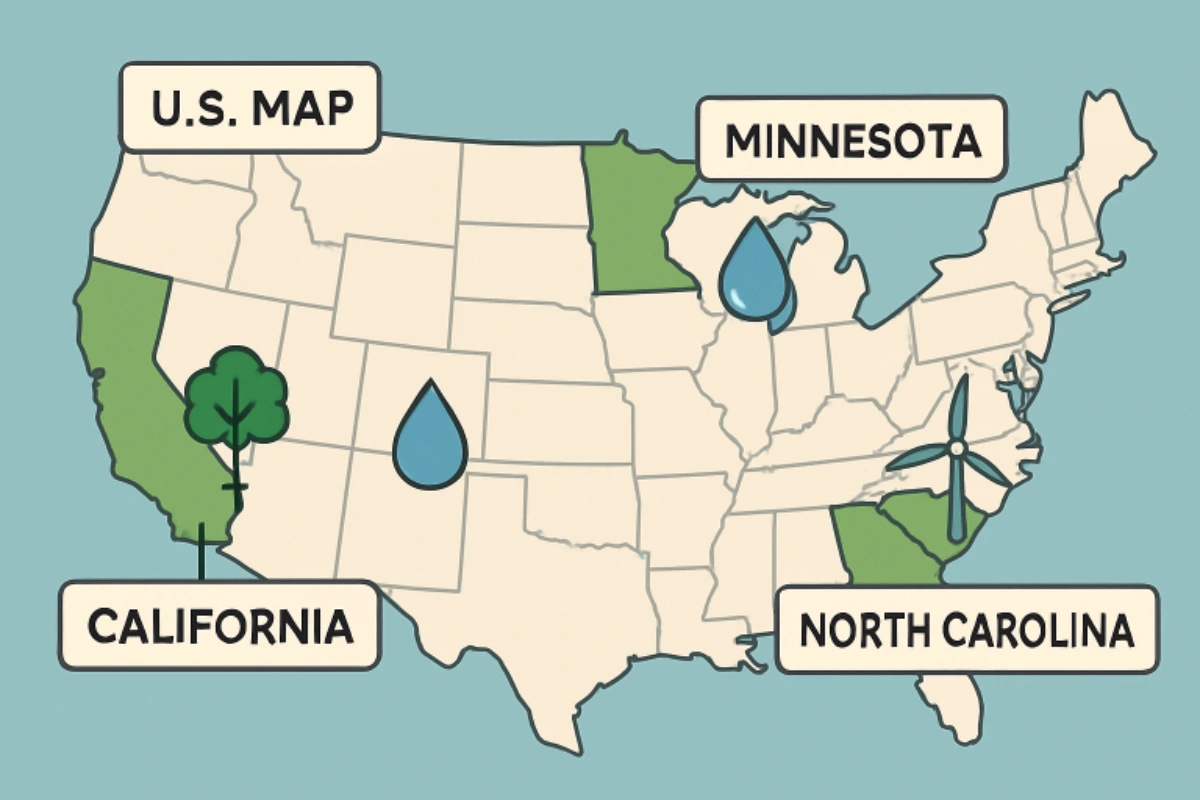
- Policy Innovation: States such as California and Washington have championed renewable energy standards, plastic bans, and robust climate mitigation plans that inspire federal counterparts. These localized experiments lead to practical and adaptable solutions.
- Public Support: State-centric responses benefit from greater public engagement and buy-in, as constituents can see direct impacts of initiatives within their neighborhoods. Programs that promote clean water, land conservation, and air quality resonate on a personal level with voters, making adoption and enforcement smoother.
Notable State-Level Environmental Actions
Many states have adopted headline-grabbing measures in recent years, setting benchmarks for the country. For example, Maryland’s 2025 Environmental Justice Executive Order compels all state agencies to build equity considerations into their operations, prioritizing marginalized and overburdened communities in decision-making. This not only advances environmental justice but also holds state officials accountable for inclusive growth.
California has once again proven itself an environmental leader by mandating comprehensive climate risk disclosures from large corporations. This corporate climate accountability law enhances transparency and puts pressure on industry giants to curtail carbon emissions, fostering a competitive atmosphere for greener practices and greater environmental responsibility.
The Role of Advocacy Groups
The influence of nonprofit and grassroots organizations in state-level environmental policy cannot be overstated. Groups such as the Natural Resources Council of Maine (NRCM) and Citizens Campaign for the Environment (CCE) exemplify how advocacy drives legislative progress. The NRCM, founded in 1959, has persistently advocated for conservation in Maine, shaping public discourse and pushing for protective policies through coalition building and policy monitoring. The CCE, meanwhile, connects New York and Connecticut residents with policymakers, ensuring that citizens have a voice in legislative processes that affect their environments.
Collaboration and Education
Nonprofits often serve as essential bridges between science, policy, and the public. By translating complex climate data and environmental research into accessible communications, groups help foster widespread understanding and urgency around key issues. Additionally, partnerships with local educators and business leaders cultivate widespread community investment and long-term stewardship.
Challenges and Opportunities
- Resource Limitations: State and local agencies may face constraints due to budget limitations or a lack of technical expertise. This can result in uneven progress between wealthier and less affluent regions, threatening comprehensive nationwide action.
- Legal Hurdles: Sometimes, progressive state policies collide with federal regulations or face industry litigation. This tension can delay or dilute crucial initiatives, demanding skilled legal navigation and adaptive strategies.
However, these obstacles also inspire innovation. Innovative resources lead to novel funding streams and partnerships, including public-private alliances and the leveraging of federal grants. Legal pushback, meanwhile, tests and refines policies, encouraging stronger legislation built to endure judicial scrutiny.
The Future of State-Level Environmental Advocacy
As the climate crisis intensifies, state governments are expected to take on even more significant roles in environmental policy. The intersection of local expertise, engaged citizenry, and forward-thinking legislation positions states to lead both implementation and innovation. Their successes serve as scalable models for other states and even influence international environmental strategies. With citizen science programs, digital advocacy tools, and collaborative interstate compacts, the potential for state-driven progress continues to expand.
Final Thoughts
State-level environmental advocacy is rapidly altering the landscape of environmental policy in America. By embracing local solutions, fostering strong advocacy networks, and championing innovative policies, states are tackling both the causes and consequences of environmental degradation. These efforts underscore the irreplaceable value of strong local action—and foreshadow a future where state initiatives illuminate the path for national and global sustainability.