




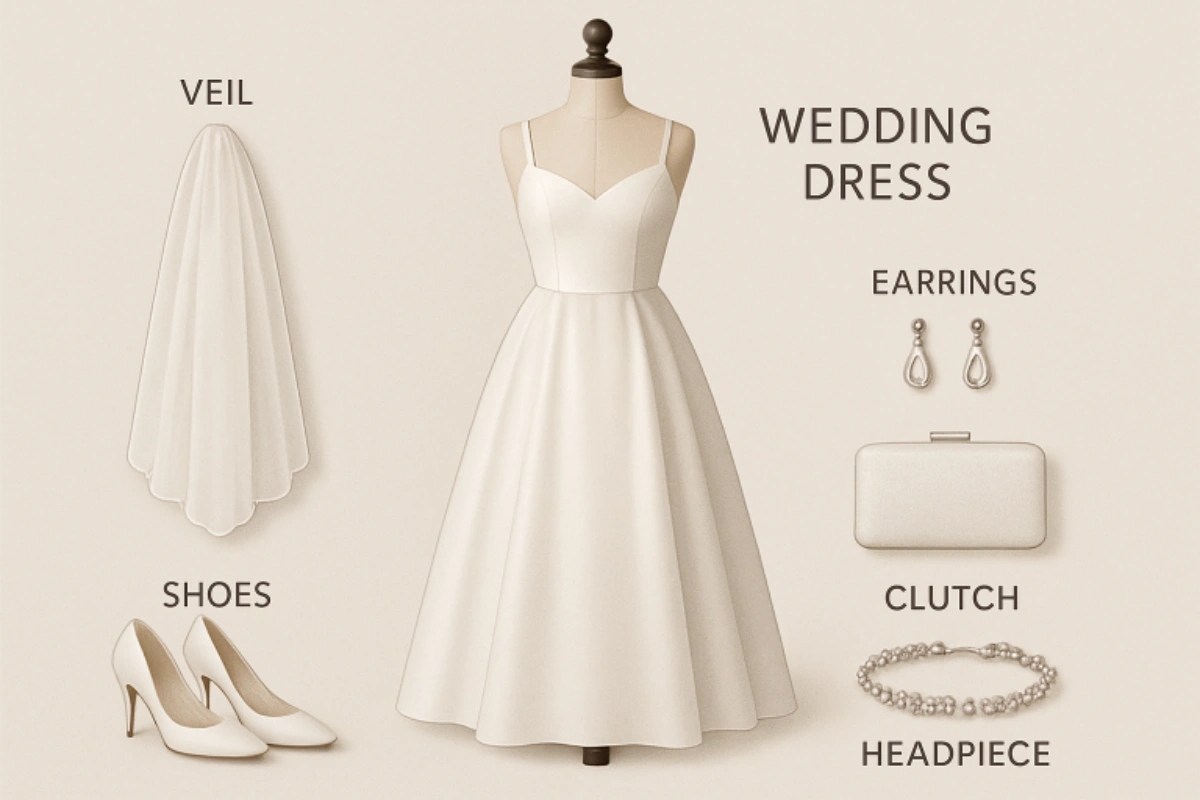
Wedding dress accessories can transform a bridal outfit, adding personality, elegance, and finishing details to the overall look. From veils and jewelry to belts, shoes, gloves, and hairpieces, there are many ways to personalize a wedding gown.
However, adding accessories also requires careful consideration. Too many pieces can compete with the dress, while the wrong choices may affect comfort or create an unbalanced appearance.
Understanding the advantages and disadvantages of different accessories can make the selection process easier.
Why Wedding Dress Accessories Matter
A wedding dress creates the foundation of a bridal look, but accessories can help complete it. They can highlight the neckline, frame the face, define the waist, or introduce additional texture and sparkle.
Accessories can also reflect personal style. A bride who prefers a classic appearance may choose pearls and a simple veil, while someone with a modern style may prefer statement earrings or a distinctive hairpiece.
The key is choosing pieces that work together rather than treating every accessory as a separate statement.
Pros of Wedding Dress Accessories
They Complete the Bridal Look
Accessories can make an outfit feel more finished. Earrings, a veil, shoes, and other carefully selected pieces can bring the different elements of the bridal appearance together.
A simple gown, for example, may provide an opportunity to introduce more detail through jewelry or a decorative hair accessory.
They Add Personal Style
Accessories offer an easy way to express individuality without changing the wedding dress itself.
A vintage-inspired hairpiece, family jewelry, colorful shoes, or a personalized veil can make the outfit feel more meaningful.
They Can Highlight the Dress
The right accessory can draw attention to specific features of a gown.
A necklace may complement a suitable neckline, while a belt can emphasize the waist. A carefully selected veil can also enhance the back or silhouette of a dress.
The accessory should support the gown rather than hide its important details.
They Can Create Different Looks
Changing accessories can give the same dress a different appearance throughout the wedding day.
For example, a bride might wear a traditional veil during the ceremony and remove it for the reception. Swapping a statement piece for simpler jewelry can also create a more relaxed evening look.
Some Accessories Can Be Reused
Unlike the wedding dress itself, many accessories can be worn again.
Jewelry, shoes, hairpieces, and certain handbags can become part of a regular wardrobe or be saved as meaningful keepsakes.
Cons of Wedding Dress Accessories
Too Many Accessories Can Look Busy
One of the biggest risks is adding too many decorative elements.
A heavily embellished dress may already have enough visual detail. Adding a large necklace, dramatic earrings, elaborate veil, and sparkling belt could make the overall appearance feel crowded.
A balanced approach is usually more effective.
They Can Increase the Wedding Budget
Accessories may appear inexpensive individually, but the total cost can increase quickly.
A bride may purchase a veil, jewelry, shoes, hair accessories, belt, handbag, and other finishing pieces. Setting an accessory budget before shopping can help prevent unnecessary spending.
Comfort Can Become an Issue
Some accessories look beautiful but may not be comfortable for extended wear.
Heavy earrings can become uncomfortable, certain hairpieces may cause pressure, and elaborate veils can require additional attention during movement.
Shoes are particularly important because the bride may spend many hours standing, walking, and dancing.
Some Pieces May Not Work With the Dress
Not every accessory suits every gown.
The neckline, fabric, embellishments, silhouette, and color of the dress should all be considered before making a purchase. Current bridal styling guidance similarly recommends choosing accessories based on the dress rather than selecting individual pieces in isolation.
Trends Can Date the Look
Fashion trends change. An accessory that looks fashionable today may not have the same appeal years later.
Brides who want a timeless appearance may prefer classic designs that complement the dress without relying heavily on short-lived trends.
Pros and Cons of Common Wedding Accessories
| Accessory | Advantages | Potential Drawbacks |
|---|---|---|
| Veil | Adds tradition and drama | Can be difficult to manage |
| Earrings | Frame the face | Heavy styles may be uncomfortable |
| Necklace | Highlights the neckline | May compete with detailed dresses |
| Belt | Defines the waist | May not suit every gown |
| Hairpiece | Adds detail to the hairstyle | Needs to be secured properly |
| Wedding Shoes | Complete the outfit | Comfort can become a concern |
| Gloves | Add vintage or formal style | May feel impractical for some brides |
| Wrap or Shawl | Provides warmth and coverage | Can hide dress details |
How to Avoid Over-Accessorizing
Start by identifying one main focal point.
If the veil is dramatic, keep the jewelry relatively simple. If statement earrings are the main feature, a necklace may not be necessary.
The dress itself should also guide the decision. A heavily decorated gown generally needs fewer competing details, while a simple dress can provide more freedom for accessories.
It can also help to try everything together before the wedding. Seeing the dress, hairstyle, veil, jewelry, and shoes as one complete outfit makes it easier to identify anything that feels excessive or disconnected.
Consider Comfort Alongside Style
A beautiful accessory is not useful if it makes the wedding day uncomfortable.
Think about how long each piece will be worn and what activities are planned. Outdoor ceremonies, long receptions, dancing, and warm weather may all affect accessory choices.
Shoes should be tested before the wedding, while earrings, hairpieces, and other items should be worn during a trial whenever possible.
Should You Buy or Rent Accessories?
Buying allows you to keep the accessories after the wedding. This can be especially meaningful when choosing jewelry or pieces that may become family keepsakes.
Renting can make sense for expensive accessories that you do not expect to use again. It may provide access to a particular style without requiring the full purchase price.
The right choice depends on budget, sentimental value, and how likely you are to reuse the item.
Final Thoughts
Wedding dress accessories can add personality, elegance, and versatility to a bridal outfit, but they should be selected carefully.
The main benefits include completing the look, expressing personal style, highlighting the dress, and creating different looks throughout the day. The potential drawbacks include additional costs, reduced comfort, and the risk of choosing too many competing pieces.
The best approach is to consider the dress first and then select accessories that complement its style, neckline, fabric, and level of detail. With thoughtful planning, accessories can enhance the wedding-day look without overwhelming it.