




Key Takeaways
- Advancements in dental restoration have transformed treatment for those with complete tooth loss, offering improved stability and aesthetics.
- Options such as All-on-4 implants, implant-supported dentures, and traditional dentures each have circumstances where they excel.
- Individual factors, such as jawbone health, lifestyle, and budget, play a critical role in selecting the right solution.
- A personalized consultation with a dental professional is essential for the best functional and cosmetic outcomes.
Table of Contents
- All-on-4 Implants
- Implant-Supported Dentures
- Traditional Dentures
- Comparing the Options
- Conclusion
Edentulism—the loss of all natural teeth—not only affects basic functions such as eating and speaking but also has profound impacts on self-confidence and overall health. In recent years, dental technology has advanced to offer individuals far more effective and comfortable solutions compared to the past. One prominent example is the full mouth dental implants Louisville,KY, which can restore aesthetics and oral function while dramatically improving quality of life.
Dental professionals can now provide a range of treatment options tailored to specific medical and lifestyle needs. Choosing the right solution requires understanding how modern solutions differ in terms of stability, long-term health benefits, comfort, and cost. These advancements enable edentulous patients to regain their confidence and oral health with greater reliability and comfort than ever before.
Complications from untreated complete tooth loss, such as bone resorption and facial collapse, have traditionally limited the longevity and functionality of removable solutions. Now, implant-based and fixed options offer new pathways for lasting oral health and personal transformation. These approaches are supported by long-term clinical evidence and recommended by leading dental organizations for their proven outcomes.
All-on-4 Implants
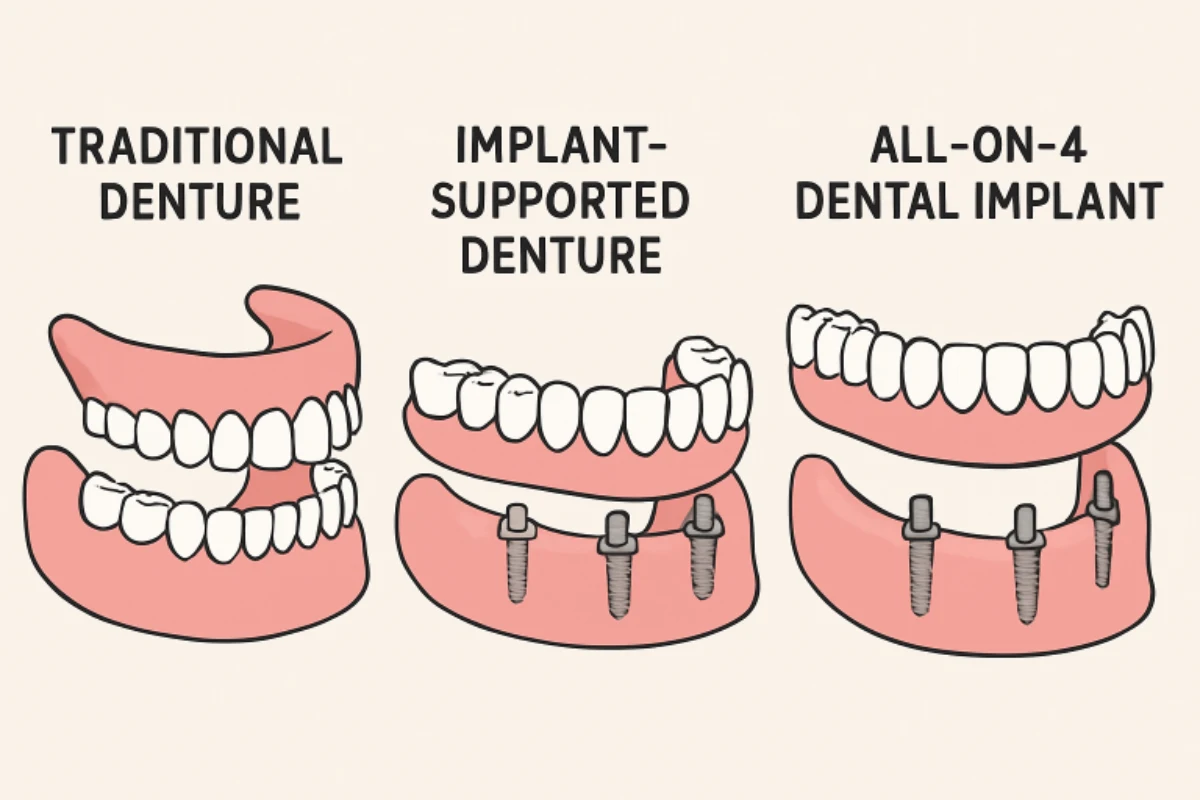
The All-on-4 implant procedure has revolutionized the way dentists address complete tooth loss. This method involves the placement of four dental implants that support an entire arch of replacement teeth. The titanium implants are strategically angled and positioned to maximize existing jawbone support, often eliminating the need for extensive bone grafting. As a result, patients typically enjoy a faster treatment timeline and reduced surgical complexity compared to traditional implant protocols.
With All-on-4, individuals benefit from a natural-looking, permanent set of teeth that provides improved chewing efficiency, enhanced speech clarity, and support for their facial structure. As detailed in a recent feature, All-on-4 has demonstrated high success rates and patient satisfaction, especially in cases of severe bone loss or when a streamlined and reliable solution is desired. Maintenance requirements are similar to natural teeth, simplifying oral hygiene routines for many patients.
Implant-Supported Dentures
Implant-supported dentures combine the security of dental implants with the versatility of removable or fixed prosthetic teeth. Typically, two to six implants per arch anchor the denture securely, preventing slippage and minimizing common issues associated with traditional dentures. This enhanced stability enables more confident eating, speaking, and smiling, even for individuals with significant tooth loss.
A critical advantage of implant-supported dentures is their role in preserving jawbone integrity. Unlike standard dentures, which rest on the gums alone and provide no stimulation to underlying bone, implants encourage healthy bone maintenance, slowing or halting resorption. This support helps maintain facial volume and prolongs the overall fit and comfort of the dentures. Patient-reported comfort and satisfaction are consistently high, with many describing life-changing improvements after transitioning to this advanced restorative option.
Traditional Dentures
Traditional dentures are well-known as a cost-effective and non-surgical solution for complete tooth loss. Made from durable acrylic or resin materials, these removable prostheses substitute not only lost teeth but also some of the surrounding gum tissue, helping to restore a natural-looking smile. For those who may not be candidates for implants due to medical or financial reasons, conventional dentures remain a valuable treatment option.
However, it’s important to note that over time, the jawbone shrinks when teeth are absent, leading to changes in the fit and comfort of dentures. Regular adjustments or periodic replacements may be necessary as oral anatomy evolves. Despite their limitations in stability and chewing efficiency, advancements in materials have made modern dentures lighter, more comfortable, and more lifelike than ever before.
Comparing the Options
Selecting the ideal full mouth restoration depends on a nuanced consideration of several factors:
- Stability and Functionality: Both All-on-4 and implant-supported dentures offer significant improvements in stability and functionality, allowing patients to eat and speak with confidence. Traditional dentures, though improved in design, may still shift during daily activities.
- Bone Preservation: Implant-based solutions notably slow bone deterioration, protecting facial contours, whereas traditional dentures do not interact with underlying bone tissue.
- Procedure Complexity: All-on-4 is less invasive than placing multiple implants per arch and can often be completed in fewer visits, making it attractive for those seeking a streamlined approach. Traditional dentures do not require surgery, but they may need ongoing adjustments.
- Cost Considerations: While traditional dentures present the most affordable upfront price, the long-term investment in implant-based restorations can reduce ongoing maintenance and replacement costs, offering better value over time for many patients.
Conclusion
Modern solutions for edentulism empower individuals to restore comfort, function, and aesthetic appeal regardless of their starting point. All-on-4 implants and implant-supported dentures bring lasting improvements by addressing the root issues of stability and bone preservation. Traditional dentures remain a suitable option for those who prioritize an inexpensive, non-surgical approach. The best restoration is one that fits the patient’s medical needs and lifestyle goals, devised through close collaboration with a skilled dental specialist. By exploring these innovative solutions, individuals can reclaim their oral health and enjoy a renewed quality of life.