




Key Takeaways
- Laser dentistry uses focused light for selected dental and soft-tissue procedures.
- Different lasers are designed for different types of oral tissues and treatments.
- Lasers may be used for gum procedures, periodontal care, cavities, sensitivity, and some whitening protocols.
- Potential benefits can include precise treatment and reduced bleeding in certain soft-tissue procedures.
- Laser treatment does not guarantee a pain-free visit or eliminate the need for anesthesia.
- Traditional dental instruments remain appropriate for many procedures.
- Patients should discuss benefits, risks, alternatives, recovery, and costs before treatment.
- Good brushing, cleaning between teeth, water intake, and regular dental visits remain essential.
- Patients with dental anxiety should communicate their concerns so the dental team can plan appropriate comfort measures.
- A professional evaluation can determine whether laser treatment is suitable for an individual patient’s needs.
Laser dentistry gives dentists another precise tool for treating certain concerns involving teeth, gums, and other oral tissues. For patients in Willowbrook, Illinois, where packed workweeks, school schedules, and winter weather can make it tempting to postpone care, the right treatment approach may help make a needed visit feel more manageable. Local patients who want to discuss modern treatment options can begin by exploring dentistsofhinsdalelake.com and scheduling a personal evaluation. A laser is not a replacement for every traditional dental instrument, nor is it automatically the best choice for every procedure. It is a focused light device for carefully selected treatments. When it suits the diagnosis and the patient’s needs, laser dentistry may support precise care, greater comfort, and an easier recovery experience.
What Laser Dentistry Is
Dental lasers use concentrated light energy to interact with tissue. Different wavelengths are designed for different purposes. Some lasers are used mainly on soft tissue, such as the gums, while others may be used on hard tissue, including tooth structure. Light energy can cut, reshape, remove, or treat targeted tissue, depending on the type of laser and the procedure. In practical terms, laser treatment is usually one component of a broader care plan. A dentist still relies on an examination, diagnostic images when appropriate, clinical experience, and your treatment goals before recommending it. The focused light used in laser dentistry can be applied to several oral-health needs, but the best use depends on the condition being treated.
Procedures That May Use a Dental Laser
Laser technology may be considered for a range of treatments. Exact options vary based on the available equipment and the dentist’s clinical judgment.
- Gum contouring: A laser may reshape excess gum tissue to improve access to a tooth or refine the gumline.
- Soft-tissue procedures: Dentists may use lasers for selected procedures involving lesions, frenulum tissue, or small areas of gum tissue.
- Periodontal care: A laser may be used as part of treatment for certain gum concerns, alongside the cleaning and home-care measures a dentist recommends.
- Cavity-related care: Some hard-tissue lasers can assist with removing decay or preparing a tooth in selected situations.
- Tooth sensitivity: Certain laser approaches may be considered for sensitivity by targeting the microscopic channels in exposed dentin.
- Whitening support: Light may be used with a professionally applied whitening system, depending on the product and protocol.
Potential Benefits for Patients
The potential advantage of a laser is precision. A clinician can focus energy on a small treatment area, which may help preserve surrounding tissue in appropriate cases. For soft-tissue procedures, lasers can also help control bleeding by coagulating small blood vessels during treatment. Some patients experience less swelling or tenderness after certain laser procedures than they expect from conventional techniques. Recovery can still vary widely based on the treatment, the extent of the area involved, your health history, and how closely aftercare instructions are followed. A laser does not guarantee a pain-free appointment or eliminate the need for an anesthetic when an anesthetic is clinically appropriate.
What to Expect During Treatment
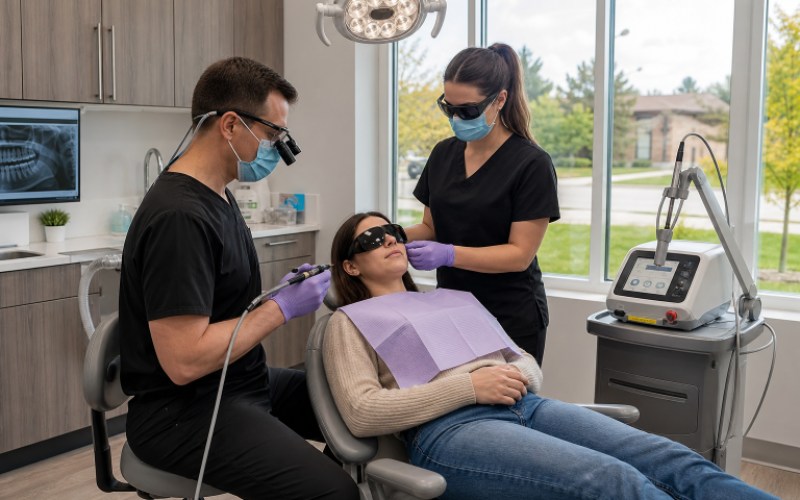
Before treatment, the dentist should explain the purpose of the procedure, available alternatives, likely benefits, possible risks, expected recovery, and cost considerations. This conversation matters because informed decisions are based on more than the type of technology being used. During a laser procedure, you and the dental team wear protective eyewear. Depending on the procedure, the dentist may use a topical or local anesthetic. You may hear equipment sounds, notice a mild smell from treated tissue, or feel pressure, but you should tell the dental team right away if you are uncomfortable. Some appointments use a laser alongside familiar instruments rather than instead of them.
Why Lasers Are Not for Every Procedure
It is important to keep expectations realistic. A laser cannot replace fillings, crowns, root canal therapy, periodontal treatment, or oral surgery when those treatments are necessary. In many cases, standard instruments remain the most predictable or efficient option. The dentist’s goal should be to select the method that addresses the problem safely and effectively, not simply the newest-looking technology. Lasers are regulated medical devices, and proper training, protective measures, and patient selection are essential. The Food and Drug Administration notes that medical lasers can be used for precise surgical work but also carry risks if not used appropriately. That is why treatment should be performed by qualified dental professionals who understand the device and the procedure.
Laser Dentistry and Gum Health
Healthy gums are the foundation for a comfortable smile. Persistent bleeding, tenderness, recession, bad breath, loose teeth, or changes in how teeth fit together deserve professional attention. A laser may be part of a plan for selected gum issues, but it does not remove the need for routine cleanings, plaque control, and personalized periodontal care. For Willowbrook residents, regular care is especially valuable when busy commutes, family obligations, and seasonal routines disrupt appointments. Addressing gum symptoms early may give a dentist more conservative options and can prevent a small concern from becoming harder to manage.
A Consideration for Dental Anxiety
Dental anxiety is common, and it can lead people to delay care until discomfort becomes difficult to ignore. For some patients, the reduced vibration or quieter feel of a laser during certain procedures may be reassuring. Others may prefer traditional methods, additional numbing, breaks during treatment, or other comfort measures. Open communication is more important than pretending to be calm. Let the dental team know about past difficult experiences, gag sensitivity, fear of needles, trouble getting numb, or a preference for clear step-by-step explanations. Those details can help shape a more supportive visit.
Aftercare and Daily Oral Hygiene
Follow the instructions given for your exact procedure. You may be advised to avoid vigorous brushing near a treated gum area, choose softer foods temporarily, use a prescribed rinse, or avoid tobacco while the tissue heals. Call the office if pain increases instead of improving, bleeding is difficult to control, swelling becomes significant, or you develop a fever. Laser treatment works best as part of consistent dental care. Brushing twice daily with fluoride toothpaste, cleaning between teeth, drinking water regularly, limiting frequent sugary snacks and drinks, and attending recommended checkups remain essential. Technology can support treatment, but daily habits protect the results.
Questions to Ask Before Treatment
Make the Conversation Specific
- What oral-health problem is this treatment intended to address?
- Why is a laser being recommended for my situation?
- What are the alternatives, including conventional treatment?
- Will I need local anesthetic or additional treatment afterward?
- What should I expect during healing, and what warning signs should prompt a call?
- Is the treatment covered by my dental plan, and what costs may remain?
Choosing Care That Fits Your Needs
Laser dentistry can improve dental care when it is used for the right purpose and as part of a thoughtful, individualized plan. It may offer precision, support soft-tissue management, and help some patients feel more comfortable with treatment. The best next step is a professional evaluation that considers your oral health, your comfort level, and the treatment outcome you want to achieve.
Conclusion
Laser dentistry can be a useful option for selected dental procedures, but its value depends on the condition being treated, the type of laser available, and the dentist’s clinical judgment. For patients in Willowbrook, Illinois, understanding how laser treatment differs from conventional dental methods can make it easier to discuss appropriate options without assuming that newer technology is always better. A dental evaluation can help determine whether a laser may be useful for gum care, soft-tissue treatment, selected cavity procedures, sensitivity, or other concerns. Patients should also consider the expected benefits, possible risks, alternatives, recovery requirements, and costs before proceeding. Regardless of the treatment method, routine brushing with fluoride toothpaste, cleaning between teeth, mindful eating and drinking habits, and recommended dental checkups remain important for maintaining oral health. Patients who experience dental anxiety can also discuss their concerns and preferred comfort measures with the dental team. Ultimately, laser dentistry works best when it is selected for a clear clinical reason and incorporated into an individualized care plan.