




Key Takeaways
- All-on-4 dental implants provide an innovative, minimally invasive solution for full-arch tooth replacement.
- This approach delivers immediate functional and aesthetic benefits, often without requiring bone grafts.
- Comparisons to traditional dentures highlight superior comfort, stability, and bone preservation with All-on-4.
- Understanding patient candidacy, the step-by-step process, and the necessary aftercare ensures optimal outcomes.
Table of Contents
- Understanding All-on-4 Dental Implants
- Benefits of All-on-4 Implants
- Comparing All-on-4 to Traditional Dentures
- Who Is a Candidate for All-on-4 Implants?
- The All-on-4 Procedure: Step-by-Step
- Post-Procedure Care and Maintenance
- Potential Risks and Considerations
- Conclusion
Understanding All-on-4 Dental Implants
Modern tooth-loss solutions have evolved far beyond removable dentures, offering patients a more permanent, natural feel. All-on-4 dental implants are a state-of-the-art restorative dentistry procedure designed to help individuals restore both appearance and function in a single appointment. The technique utilizes four dental implants placed at precise angles, enabling a full arch of teeth to be firmly secured and supported, even in cases where bone density is compromised.
Unlike traditional removable dentures that rest on the gums, Full Mouth Dental Implants St. Louis, MO, offer patients a fixed solution that dramatically improves daily comfort and overall oral health. By integrating with the jawbone, these implants mimic the feel and strength of natural teeth while maintaining facial structure.
This advanced technique is particularly appealing to those who desire a minimally invasive solution without the lengthy timelines and multiple procedures often linked to conventional implants. With a focus on gentle solutions, patients often experience less pain and a faster recovery. As a result, All-on-4 is rapidly becoming the preferred choice for comprehensive tooth replacement.
The development of the All-on-4 system has been made possible by significant advancements in digital imaging and surgical planning. These technologies allow dental professionals to create highly personalized treatment plans that maximize each patient’s existing bone structure, minimizing discomfort and enhancing final results.
Benefits of All-on-4 Implants
- Immediate Results: One of the significant advantages of All-on-4 is the ability to walk out of your procedure with a complete set of functional teeth. A temporary prosthesis is usually provided the same day, helping restore confidence right away.
- Bone Preservation: The unique placement of the implants, especially those in the back, stimulates the jawbone, helping prevent bone loss. This reduces the risk of facial sagging that can occur with traditional dentures.
- Enhanced Comfort and Stability: All-on-4 implants are securely anchored, eliminating the worry of slippage or sore spots familiar with removable dentures. Patients can speak, eat, and smile naturally without disruption.
Comparing All-on-4 to Traditional Dentures
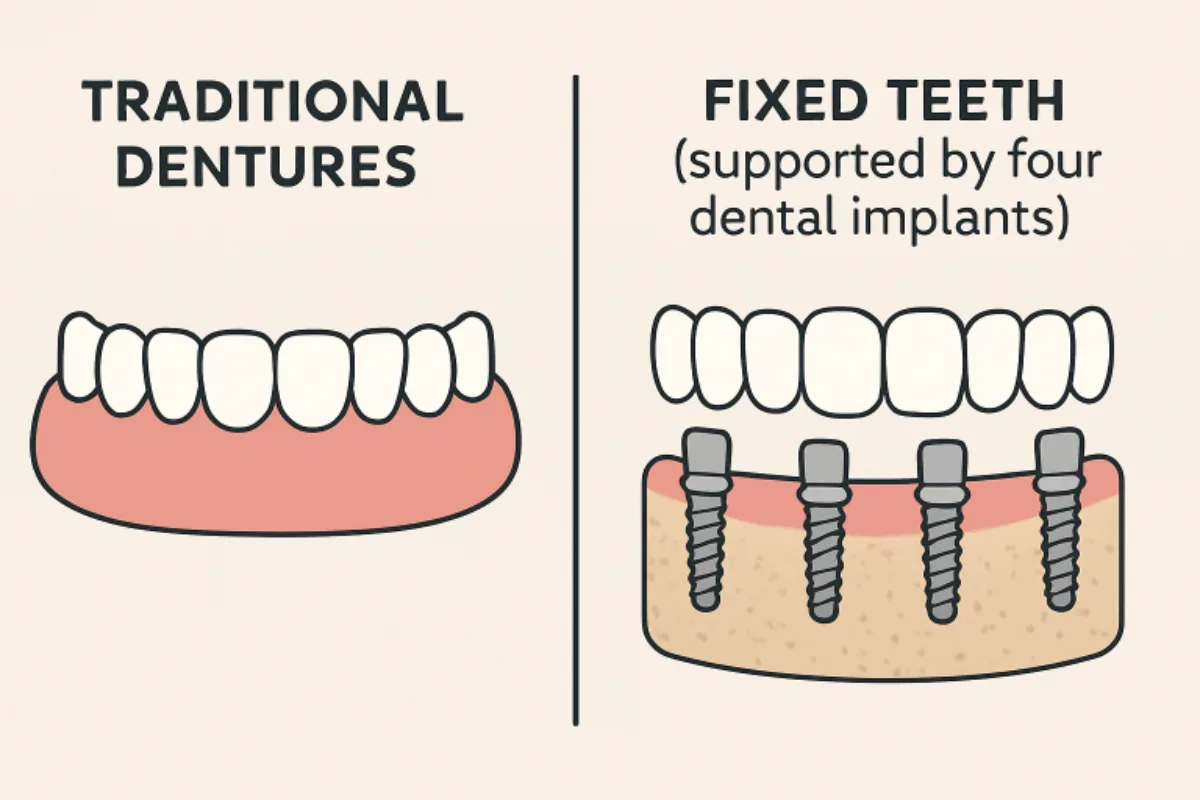
Traditional dentures, though widely used, often come with drawbacks such as discomfort, limited chewing function, and the need for messy adhesives. Over time, dentures can accelerate bone loss, leading to changes in facial structure and a less stable fit. By comparison, All-on-4 dental implants act more like natural tooth roots. They promote bone retention and provide fixed, non-removable teeth that look and function naturally.
This stability not only improves overall quality of life but also helps patients maintain a more youthful facial appearance. For those interested in more research-backed comparisons.
Ideal candidates for All-on-4 implants are individuals missing most or all of their teeth on one or both arches or those with severely damaged teeth that cannot be restored. Sufficient jawbone structure is necessary, but the procedure can often be performed even with moderate bone loss, thanks to the strategic placement of implants. However, it is crucial that candidates are in good general health and committed to maintaining oral hygiene after the procedure.
A comprehensive evaluation, including 3D imaging and a review of medical history, is recommended to determine suitability. During this assessment, a dental professional will discuss the procedure’s benefits, address patient concerns, and customize the treatment plan.
The All-on-4 Procedure: Step-by-Step
- Consultation and Planning: The journey begins with a thorough consultation, incorporating imaging technology to map out precise implant placement.
- Surgical Placement: Four titanium implants are inserted, with the back implants angled to maximize contact with available bone and bypass anatomical obstacles.
- Provisional Prosthesis: A temporary set of prosthetic teeth is attached, allowing patients immediate function and aesthetics.
- Healing Period: Over the next few months, the implants fuse with the jawbone through osseointegration, providing a secure and lasting foundation.
- Final Prosthesis: Once integration is confirmed, a customized, lifelike permanent prosthesis is affixed, restoring full function and natural appearance.
Post-Procedure Care and Maintenance
Caring for All-on-4 implants is essential to ensure their longevity and maintain oral health. Patients are advised to brush and floss daily, much like with natural teeth, and to use tools designed for implant cleaning when necessary. Regular dental check-ups and professional cleanings are vital for monitoring implant stability and preventing complications such as gum disease. With diligent maintenance, All-on-4 implants can last many years, restoring confidence and quality of life.
Potential Risks and Considerations
While All-on-4 dental implants are generally safe, as with any surgery, risks such as infection, implant failure, and complications from anesthesia exist. Choosing an experienced surgical team and following post-procedure instructions can significantly minimize these risks. Most patients experience minimal discomfort, and issues are rare, but immediate communication with a dental provider is critical if any unusual symptoms arise.
Conclusion
All-on-4 dental implants represent a breakthrough in gentle, adequate tooth replacement, offering comfort, stability, and rapid restoration for those suffering from tooth loss. With immediate functional benefits, improved bone preservation, and a natural appearance, this solution is changing the landscape of full-mouth rehabilitation. A personalized approach, ongoing care, and the latest advancements in dental technology ensure outstanding outcomes for qualified candidates.