








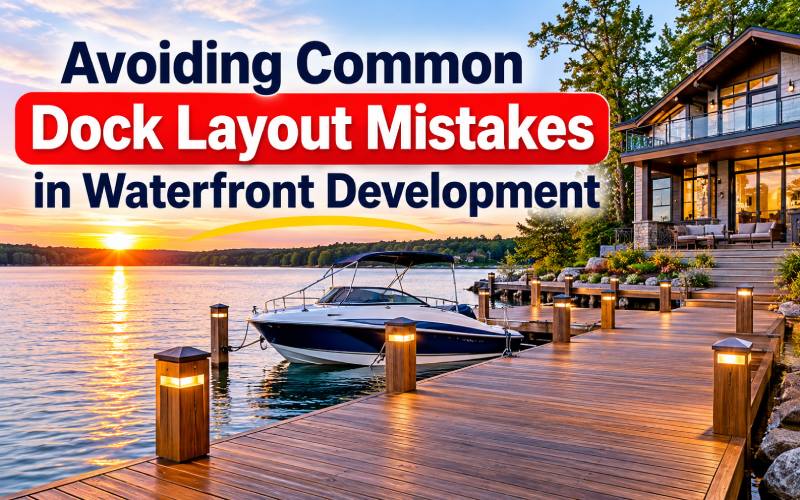
A dock that looks well-placed on a property plan can turn out to be inconvenient once construction is finished. Poor slip positioning, limited boat clearance, and overlooked shoreline conditions often create problems that are expensive to correct. Thoughtful planning helps waterfront developers avoid these mistakes and create docking areas that work for both the property and the people using them.
Placing the Dock Without Checking the Water Depth
Dock placement should begin with accurate water depth measurements rather than the shoreline’s appearance. Shallow areas, underwater drop-offs, and seasonal water-level changes can affect whether boats can safely enter and leave their slips. A location with adequate depth during summer may become unusable during a reservoir drawdown. Developers also need to account for the vessel’s draft, underwater equipment, and clearance beneath the dock. Experienced floating dock builders examine these conditions before recommending platform placement. Positioning a structure slightly farther from shore may provide better boating access, but it can also require longer walkways and different anchoring arrangements.
Why Tight Boat Slips Create Problems After Installation
Boat slips need enough space for more than the vessel’s listed width. Fenders, outboard motors, swim platforms, and mooring lines all affect the room required for safe docking. Narrow slips can make maneuvering difficult, particularly when wind pushes boats sideways or several vessels share the same docking area.
Approach angles deserve attention as well. A poorly positioned entrance may force operators to make sharp turns near neighboring boats or underwater obstacles. Developers comparing aluminum boat docks for sale should examine usable slip dimensions, turning space, and walkway positions rather than relying only on overall dock measurements. Allowing sufficient clearance during the design stage can prevent repeated contact damage and inconvenient boarding arrangements.
Overlooking How the Dock Connects to the Shore
The connection between land and water can become a major inconvenience when developers focus entirely on the main platform. Steep banks may require elevated landings, while changing water levels affect the angle of access gangways. A short walkway that works during normal conditions can become uncomfortable or unsafe when the water drops. Pathways should also accommodate passengers carrying equipment without creating narrow turns or unnecessary steps. Aluminum docks can use different gangway and platform arrangements to address these requirements, but shoreline access must be considered before finalizing the layout. Proper planning also leaves room for lighting, drainage, and handrails where appropriate.
Dock Orientation Can Affect Stability and Everyday Use
Wind direction, wave exposure, and nearby boat traffic influence how a dock should face the water. A slip opening positioned directly against prevailing winds can make docking harder, especially for larger pontoons or lightweight recreational boats. Frequent wakes may also place unnecessary stress on exposed corners, connections, and mooring equipment.
An aluminum floating dock can accommodate changing water elevations, but its anchoring system must control sideways movement. Poorly positioned anchors may allow excessive drifting or place uneven pressure on the frame. Developers should evaluate the expected wave conditions and select anchoring arrangements that suit the lakebed and platform configuration.
Layout orientation also affects waterfront activities beyond boating. A large platform can block swimming access, interfere with neighboring docks, or occupy space better suited for other recreational uses. Buyers researching aluminum docks for sale should compare straight, L-shaped, and U-shaped configurations based on how people will approach, board, and use their boats. The best arrangement provides practical access without crowding the shoreline.
Leaving No Room for Future Waterfront Improvements
Development plans sometimes account only for the boats and activities currently expected on the property. Future owners may want larger vessels, additional slips, covered storage, or recreational decking. A layout that fills the entire permitted waterfront area can make these improvements difficult or impossible without major reconstruction. Structural capacity, local regulations, and available water depth should guide decisions about possible expansion.
Flotation Systems manufactures custom aluminum boat docks with different floating configurations and anchoring options for residential and commercial waterfront properties. Developers planning new docking areas can consider these designs when working around shoreline restrictions, boat access requirements, and future property use. Reviewing the available configurations before construction can help avoid layouts that limit how the waterfront functions over time.