




Table of Contents
- Why Bathroom Design Is Shifting
- Set Remodeling Goals Before Choosing Finishes
- Choose a Shower, Tub, or Both
- Build Safety Into the Design
- Choose Easier-Cleaning Materials
- Improve Layout and Storage
- Plan Lighting and Moisture Control
- Create a Practical Budget
- Avoid Common Remodeling Mistakes
- Pre-Project Checklist
- Make Choices That Work for Years
A successful bathroom remodel should make everyday routines easier, safer, and more enjoyable. For homeowners in Orange Park, Florida, that often means selecting finishes and features that stand up to frequent use, help manage humidity, and keep the room comfortable without chasing short-lived design fads.
Whether the project is a modest hall bath update or a complete primary-suite renovation, planning a bathroom remodel River Park around real household needs creates a stronger result. Start by considering how the room functions on a busy weekday morning, not just how it may appear in a finished-project photo.
Why Bathroom Design Is Shifting
Bathrooms are increasingly being planned as practical personal spaces rather than purely utilitarian rooms. Homeowners often prioritize storage, better lighting, accessible entries, durable surfaces, and features that support a calmer routine. The 2026 bath trends report reflects this focus, identifying durable materials, layered lighting, customized storage, and aging-in-place features as important considerations in contemporary bathroom planning.
In Orange Park, thoughtful planning also matters because bathrooms must handle regular moisture exposure. A remodel should improve the way the room works while giving the household a finish palette and fixture style it can enjoy for years.
Set Remodeling Goals Before Choosing Finishes
Before selecting tile, faucets, or paint colors, write down the problems the remodel needs to solve. Common concerns include a high tub wall, slippery flooring, poor mirror lighting, crowded storage, worn grout, weak exhaust ventilation, and an awkward path between fixtures.
Organize the list into three categories:
- Essential work: leaks, water damage, failed ventilation, unsafe surfaces, or outdated electrical components.
- Comfort upgrades: more shower space, drawers, a handheld showerhead, or better task lighting.
- Style preferences: colors, hardware finishes, mirrors, and decorative tile.
This order helps protect the budget. A beautiful vanity will not correct a poor layout or a shower that is difficult to enter safely.
Choose a Shower, Tub, or Both
The right bathing fixture depends on who uses the bathroom and how they use it. A walk-in shower can simplify entry and cleaning. A tub-shower combination may suit a secondary bathroom used by children or guests. Keeping a bathtub can also be a sensible choice in a home with only one full bath.
For a shower-focused remodel, consider a low-entry design, a handheld showerhead, controls positioned where they can be reached before stepping into the spray, built-in shelving, and a bench if the space and budget allow. Before removing an existing tub, measure door clearances, available turning room, plumbing locations, and nearby towel storage.
Build Safety Into the Design
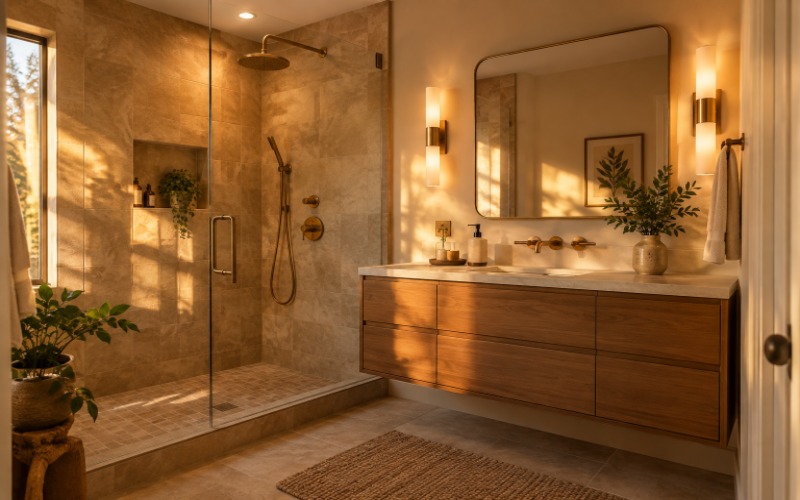
Safety features do not need to make a bathroom feel clinical. Slip-resistant floor tile, secure grab bars in finishes that match other hardware, brighter vanity lighting, shower seating, wider clear paths, and comfort-height toilets can fit naturally into a polished design.
It is also wise to install wall blocking during construction, where grab bars may be wanted later. This adds flexibility without requiring the homeowner to make every future-accessibility decision today. Recent homeowner accessibility findings highlight low-curb showers, curbless entries, and additional lighting as commonly selected features for bathrooms designed to adapt to changing needs.
Choose Easier-Cleaning Materials
Materials affect how much time a bathroom requires to maintain. Large-format wall tile or solid shower panels can reduce the number of grout lines that need routine attention. Floating vanities can make the floor easier to reach, while simple cabinet pulls and uncluttered counter areas reduce places where dust and residue collect.
Choose surfaces based on water exposure, traction, durability, and the manufacturer’s care instructions. Textured flooring can improve footing, but a heavily textured surface may require more detailed cleaning. Low-maintenance does not mean maintenance-free, especially in shower areas where regular cleaning and prompt attention to caulk or grout wear remain important.
Improve Layout and Storage
Layout often has a greater effect on daily satisfaction than decorative finishes. Keep walking paths as open as possible, confirm that doors and drawers can operate without conflict, and place towels and toiletries near where they are used. Store daily items between waist and shoulder height when practical, reserving high or low storage for less frequently used supplies.
In a compact Orange Park bathroom, a recessed medicine cabinet, shallow linen storage, vanity drawers, wall-mounted fixtures, and a clear glass shower panel can help the room feel less crowded. For example, moving clean towels from a distant closet to a vanity drawer or shelf beside the shower can reduce countertop clutter and make morning routines smoother.
Plan Lighting and Moisture Control
A well-planned bathroom uses several types of lighting. General lighting brightens the room, task lighting supports grooming at the mirror, accent lighting adds visual warmth, and low-level lighting can make nighttime use easier. Even illumination on both sides of a mirror helps reduce harsh facial shadows.
Ventilation deserves equal attention. An appropriately selected exhaust fan, proper ducting, prompt leak repairs, and regular use of the fan after bathing can help manage lingering moisture. Electrical work, wet-area lighting, and ventilation changes should be reviewed and completed by qualified professionals.
Create a Practical Budget
Bathroom remodeling costs vary based on room size, layout changes, plumbing, electrical updates, waterproofing, permits, materials, and labor. Divide the budget into essential work, preferred upgrades, and optional extras. Keep a contingency reserve for conditions discovered after demolition, such as concealed water damage, uneven flooring, or aging plumbing.
When comparing written estimates, compare the scope of work rather than only the final price. Ask about payment timing, product lead times, warranties, cleanup, change-order procedures, and who is responsible for permits.
Avoid Common Remodeling Mistakes
- Ordering fixtures before verifying measurements and rough-in requirements.
- Underestimating waterproofing and ventilation needs.
- Selecting glossy floor tile without evaluating wet traction.
- Creating too little storage for daily items.
- Ignoring the lighting near the mirror and shower.
- Beginning demolition before confirming product availability.
Pre-Project Bathroom Remodel Checklist
- List the room’s biggest functional problems.
- Measure the room, doorways, fixtures, and storage areas.
- Decide whether a shower, tub, or combination best fits the household.
- Plan safety features before walls are closed.
- Compare materials for water resistance, cleaning needs, and durability.
- Review lighting, ventilation, and electrical requirements.
- Set a working budget with contingency funds.
- Confirm permits, responsibilities, and the final scope before demolition.
Make Choices That Work for Years
The strongest bathroom remodels balance personal taste with safe movement, practical storage, easy cleaning, and reliable moisture control. By focusing on how the space will support real routines in an Orange Park home, homeowners can create a bathroom that remains comfortable and useful long after the latest design trend has passed.