




Table Of Contents
- Take The Right First Steps
- Document The Crash Scene
- Choose A Qualified Repair Facility
- Notify The Insurance Company
- Know What A Repair Estimate Covers
- Watch For Hidden Damage
- Check Air Bags And Driver-Assistance Systems
- Understand The Repair Timeline
- Complete A Final Safety Inspection
- Common Questions After A Collision
- Conclusion
A collision can interrupt an ordinary Dallas drive in seconds, whether it happens near a crowded freeway interchange, on a neighborhood street, or in a busy parking lot. Once everyone is safe, the decisions that follow can affect the vehicle’s condition, insurance claim, and readiness to return to the road. Understanding the basics of collision repair can help drivers approach the process with clearer expectations.
The goal after a crash is not simply to make a vehicle look better. A complete repair process may involve visible body damage, mechanical components, safety restraints, lighting, alignment, and electronic systems. Taking organized steps from the scene through final pickup can reduce confusion and help drivers spot concerns that need attention.
Take The Right First Steps
Put personal safety ahead of photographs, paperwork, and repair decisions. If the vehicle can be moved safely, pull out of traffic, turn on hazard lights, and call 911 if anyone may be injured. Avoid discussing fault or speculating about the cause of the crash. A vehicle with leaking fluid, a damaged wheel, loose exterior parts, deployed airbags, or active warning lights should not be driven until it has been assessed.
Document The Crash Scene
Clear records can make an insurance claim easier to explain later. When it is safe to do so, photograph the vehicles, license plates, visible damage, traffic signs, signals, debris, and the surrounding roadway. Exchange names, contact details, and insurance information with the other driver. Also record witness contact information, the police report number, the date and time, weather, and road conditions.
Choose A Qualified Repair Facility
Drivers comparing a collision repair shop in Dallas should focus on communication and the scope of the proposed work, not just the initial quoted price. Ask whether the facility will provide a written estimate, explain labor and parts, document hidden damage, and describe final inspections. It is also reasonable to ask how changes to the estimate will be communicated and whether safety-related systems will be checked before delivery.
Notify The Insurance Company
Report the collision promptly and keep a running record of claim numbers, calls, emails, estimates, and decisions. An adjuster evaluates the reported loss and may inspect the vehicle or review repair documentation. The steps for filing an auto claim emphasize collecting scene information, keeping notes, and asking for written explanations when a coverage or settlement decision is unclear.
Know What A Repair Estimate Covers
An initial estimate is a starting point, not always the complete repair plan. It may include body labor, mechanical labor, refinishing, replacement parts, clips and fasteners, wheel alignment, diagnostic scans, calibration, towing, storage, or rental transportation. The usual process often includes:
- A visual inspection of accessible damage.
- Disassemble when needed to inspect covered areas.
- Documentation of newly discovered damage.
- A supplemental estimate for approved additional work.
- Structural, mechanical, and cosmetic repair work.
- Reassembly, testing, and final quality checks.
Watch For Hidden Damage
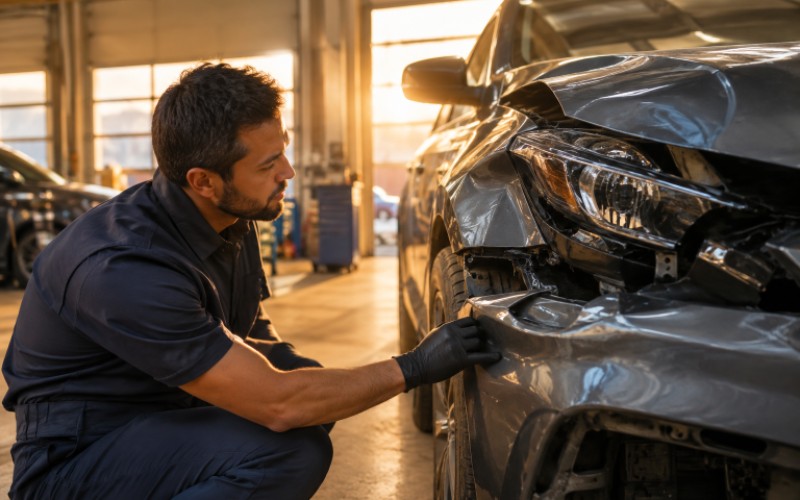
A bumper, fender, or door may show only limited exterior damage, while components behind it need attention. Brackets, mounting points, wiring, sensors, suspension pieces, and structural areas may not be visible without further inspection. For example, a vehicle may appear drivable after a low-speed impact but develop steering pull, vibration, uneven tire wear, water leaks, unusual noises, or a warning message. Those signs are reasons to request another inspection rather than assuming the issue will resolve itself.
Check Air Bags And Driver-Assistance Systems
Many vehicles rely on systems beyond body panels and paint. Depending on the impact and vehicle design, air bags, seat-belt pretensioners, cameras, radar sensors, parking sensors, and braking-assistance features may require inspection, replacement, or calibration. Federal guidance on replacing deployed airbags after a crash advises replacing used airbags before the vehicle is driven again. Do not overlook warning lights or disabled safety features simply because the exterior repair appears complete.
Understand The Repair Timeline
Repair schedules vary because damage can be discovered during disassembly, insurance approvals may be required, parts may need to be ordered, and paint, diagnostics, or calibration can add steps. Stay informed by asking when the first estimate will be ready, whether supplemental damage was found, whether parts have arrived, whether rental transportation is covered, and which tests remain before pickup. A clear update is generally more useful than an uncertain promise of completion.
Complete A Final Safety Inspection
Before accepting the vehicle, inspect more than the paint finish. Check panel alignment, doors, windows, locks, mirrors, trunk operation, lights, tires, and interior trim. Start the vehicle and confirm warning lights behave normally. Ask whether required scans and calibrations were completed, review the final invoice and repair paperwork, and take a short test drive in a safe area. Pay attention to steering response, brake feel, vibrations, noises, and warning messages.
Common Questions After A Collision
Should A Driver Accept The First Repair Estimate?
The first estimate may change when disassembly reveals damage that was not visible initially. Request written updates that explain added work and why it is needed.
Can A Vehicle Be Safe If It Still Runs?
Not necessarily. Drivability does not confirm that every restraint system, sensor, mounting point, alignment setting, or structural component is functioning correctly.
What Happens If The Insurance Company And Repair Facility Disagree?
Ask for a written explanation, compare the decision with the policy terms, and keep copies of estimates and communications. If the matter remains unresolved, the state insurance department may be able to provide consumer assistance.
When Should A Driver Avoid Driving The Vehicle?
Avoid driving if there are fluid leaks, tire or wheel damage, brake or steering concerns, loose body parts, deployed airbags, strong pulling, severe vibration, or active warning lights.
Conclusion
After a collision in Dallas, careful documentation and clear communication can make the repair process more manageable. Treat safety systems, hidden damage, and final testing as important parts of the recovery process. A vehicle should return to regular use only after it has been thoroughly evaluated and the driver is satisfied that it operates as expected.